
The Dogs’ Campaign
World War ZThis flow traces the creation of military working dogs and the emotional cost of treating partners as equipment.
increasing Bearing strength in each event
 decreasing
Bearing strength in each eventdecreasingTriage Dogs
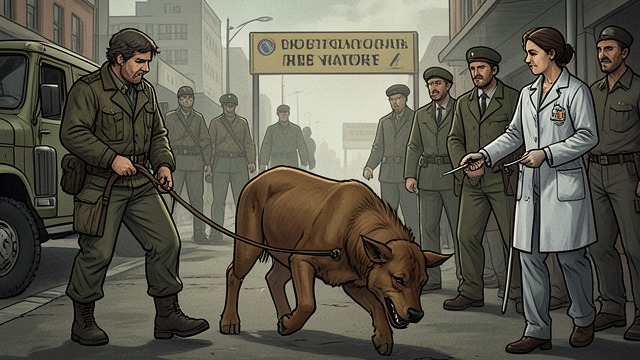
Triage Dogs
Detection
Military Working Dogs identify infected people before symptoms become visible.
Danger
Their instinctive terror makes handlers vulnerable to sudden attacks.
Value
The program saves lives because animals detect what institutions refuse to acknowledge.
Induction Trials
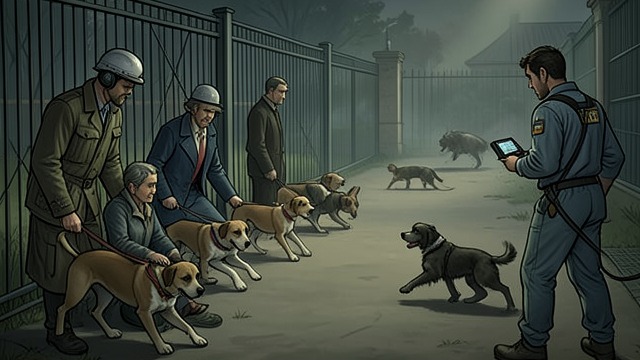
Induction Trials
Selection
Puppies are exposed to the undead and divided by their reaction.
Training
Controlled courage becomes the foundation of combat usefulness.
Cost
Most recruits wash out, and some training deaths reveal the program’s brutality.
Lure Doctrine
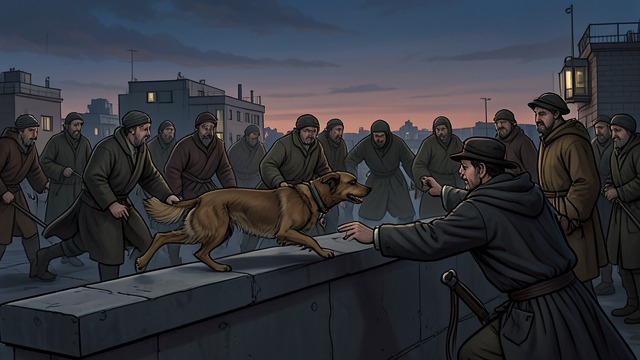
Lure Doctrine
Tactics
Dogs draw undead toward firing lines, away from civilians, or over building edges.
Innovation
Their instincts become deliberate battlefield tools.
Risk
Every successful lure depends on a handler trusting an animal under impossible pressure.
Maze’s Escorts
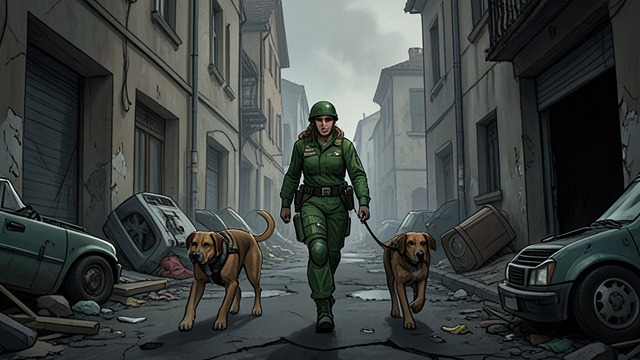
Maze’s Escorts
Partnership
Maze scouts hostile territory with Pongo and Perdy protecting her.
Adaptation
The dogs confront feral packs without biting infected flesh.
Loyalty
Their discipline demonstrates that warfare can preserve attachment rather than erase it.
Half Assets
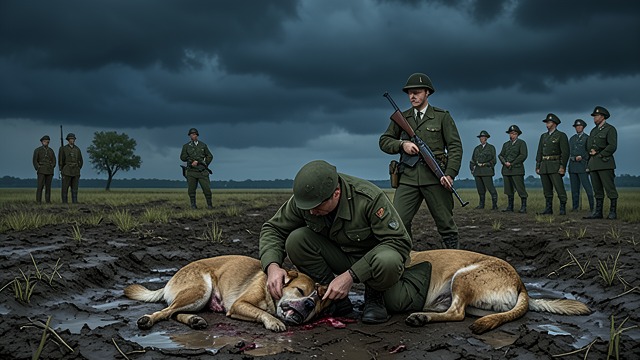
Half Assets
Loss
A handler is executed after trying to rescue an abandoned partner.
Reform
The army permits handlers to risk themselves for their dogs.
Recognition
Military Working Dogs become acknowledged as partners whose deaths carry human consequences.
early wartime screening
after the first dog program
during the new offensive
during long-range patrols
after the Eckhart incident
